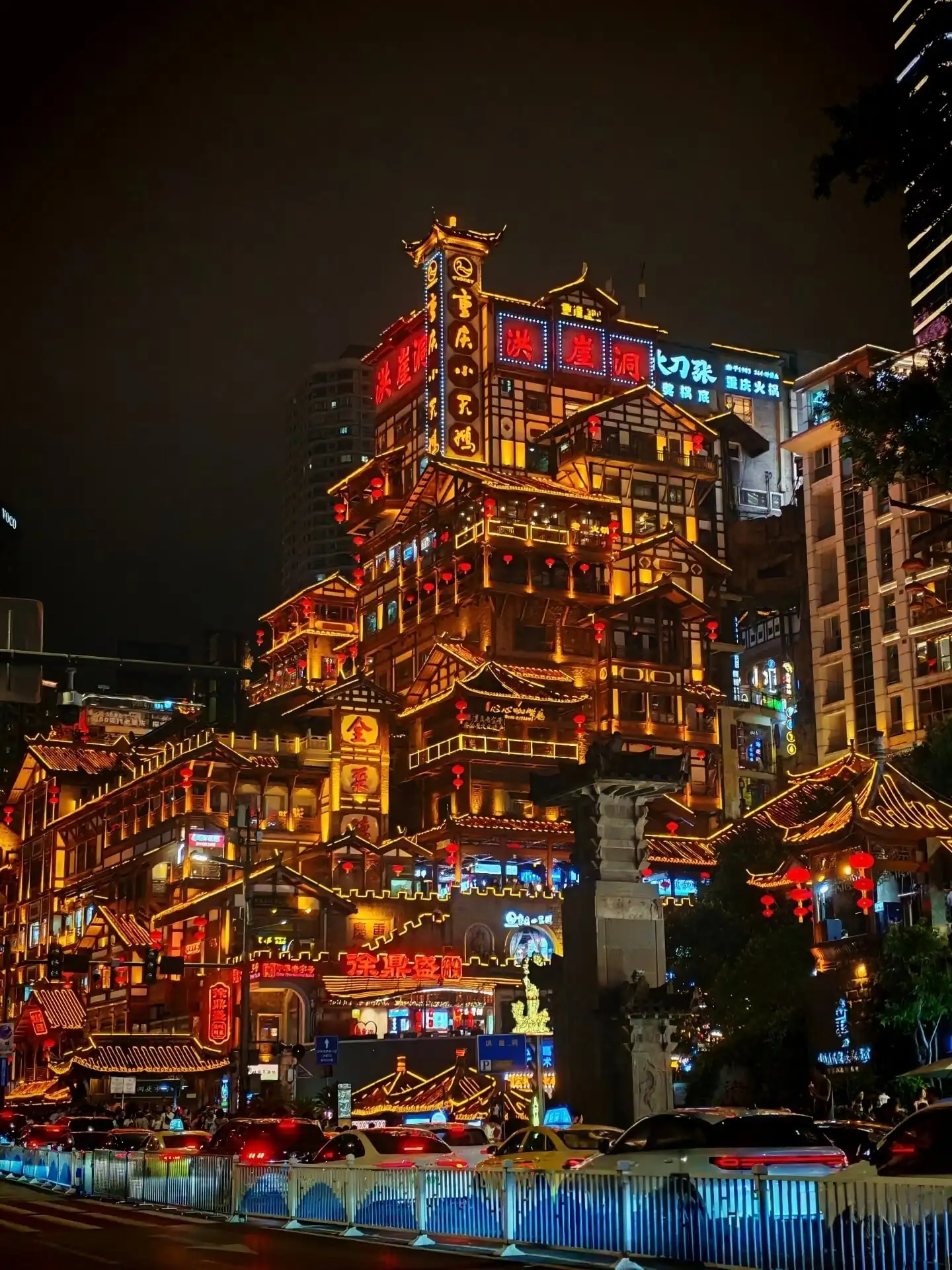
How to Get Around China 🇨🇳
China is a huge country, but getting around can be surprisingly convenient once you understand how the transportation system works.
From high-speed trains connecting major cities to modern subways, ride-hailing apps and domestic flights, China offers many ways to travel.
For first-time visitors, however, the transportation system can feel a little confusing.
Which cities should you connect by train?
When should you fly?
How do you take a taxi?
Can foreigners use ride-hailing apps?
And how do you get around once you arrive in a Chinese city?
This guide explains how to get around China, including high-speed trains, domestic flights, subways, taxis, buses and other transportation options.
🚄 1. High-Speed Trains — The Best Way to Travel Between Many Cities
For many travelers, China's high-speed rail network is the easiest way to travel between major cities.
High-speed trains are fast, comfortable and connect many popular destinations.
You can use high-speed trains to travel between cities such as:
-
Beijing
-
Shanghai
-
Xi'an
-
Chengdu
-
Chongqing
-
Hangzhou
-
Guangzhou
-
Shenzhen
-
Changsha
-
Guilin
Depending on the route, trains can be much more convenient than flying.
For example, if you are traveling between nearby major cities, a high-speed train can take you directly from one city center to another without the airport transfer time.
Why Choose High-Speed Rail?
🚄 Fast
🏙️ Convenient city-center stations
💺 Comfortable seats
🌄 Great views along the way
🧳 No complicated airport security process
For a first China trip, high-speed rail will probably become one of your favorite ways to travel.
✈️ 2. Domestic Flights — Best for Long Distances
China is enormous.
Sometimes flying makes more sense than taking a train.
Domestic flights are useful when traveling between destinations that are very far apart.
For example:
Beijing → Chengdu
Shanghai → Kunming
Guangzhou → Zhangjiajie
Beijing → Urumqi
For very long journeys, flying can save many hours.
However, remember to consider the total travel time.
A flight is not just the time in the air.
You also need to consider:
-
Getting to the airport
-
Check-in
-
Security
-
Waiting at the airport
-
Baggage
-
Transportation from the airport to your hotel
For some routes, a high-speed train may still be more convenient even if the journey takes slightly longer.
🚄 Train or Flight: Which Is Better?
A simple rule is:
Choose High-Speed Rail When:
-
The journey is relatively short
-
The train goes directly to the city center
-
You want to avoid airports
-
You want to enjoy the scenery
-
You are traveling between major nearby cities
Choose a Flight When:
-
The distance is very long
-
There is no convenient direct train
-
The train journey takes many hours
-
Your itinerary requires a large geographic jump
Don't automatically choose the fastest option on paper.
Choose the option that makes your entire journey easier.
🚇 3. Subway — The Best Way to Get Around Major Cities
Once you arrive in a major Chinese city, the subway is often one of the easiest ways to get around.
Cities such as:
-
Beijing
-
Shanghai
-
Guangzhou
-
Shenzhen
-
Chengdu
-
Chongqing
have extensive subway systems.
The subway is particularly useful during rush hour because traffic can be extremely heavy.
Why Use the Subway?
🚇 Fast
💰 Affordable
🗺️ Easy to understand with map apps
🚗 Avoids traffic
🏙️ Connects major attractions and neighborhoods
If you're staying in a major city for several days, learning how to use the subway can save you a lot of time.
🚕 4. Taxis in China
Traditional taxis are available in most Chinese cities.
You can find them at:
-
Airports
-
Train stations
-
Hotels
-
Major tourist attractions
-
Busy streets
However, communication can sometimes be difficult if you don't speak Chinese.
A useful tip is to keep your destination written in Chinese.
Instead of showing a taxi driver:
“The Forbidden City”
showing:
故宫
can be much easier.
The same applies to hotels.
Keep your hotel's Chinese name and address saved on your phone.
📱 5. Ride-Hailing Apps
Ride-hailing is another convenient way to travel around Chinese cities.
It can be especially useful when:
-
You have luggage
-
You are traveling late
-
Public transportation is inconvenient
-
You are traveling with family
-
You need to reach a specific address
Depending on the service and your setup, international travelers may be able to use supported ride-hailing services through local apps or integrated payment platforms.
Before your trip, prepare the necessary apps and payment methods.
Always check the pickup location carefully, especially at large train stations and airports.
🚌 6. Buses
Public buses are available throughout China.
They can be useful for:
-
Short trips
-
Local neighborhoods
-
Smaller cities
-
Scenic areas
-
Places not connected by subway
However, buses can be more difficult for first-time international visitors because routes and announcements may not always be available in English.
For most tourists, the subway or ride-hailing is usually easier in large cities.
🚶 7. Walking — The Best Way to Explore Neighborhoods
Don't underestimate walking.
Some of the best China travel experiences happen away from major attractions.
Walking allows you to discover:
-
Local restaurants
-
Small cafés
-
Traditional streets
-
Markets
-
Parks
-
Residential neighborhoods
-
Local shops
For example, in Shanghai, walking through historic neighborhoods can give you a completely different experience from simply visiting the Bund.
In Beijing, walking through hutongs can help you experience everyday local life.
In Chengdu, a slow walk through local neighborhoods can be just as enjoyable as visiting major attractions.
🚲 8. Shared Bikes
Shared bicycles are common in many Chinese cities.
They can be useful for short distances when you don't want to take a taxi or subway.
They are particularly convenient around:
-
Parks
-
University areas
-
Residential neighborhoods
-
Tourist areas
-
Subway stations
Availability and payment requirements vary, so check how the local bike-sharing system works before using one.
🏙️ How to Get Around Beijing
Beijing is enormous, so transportation planning is important.
The subway is one of the best ways to move around the city.
Use it for major attractions such as:
-
Forbidden City
-
Temple of Heaven
-
Summer Palace
-
Olympic Park
For the Great Wall, transportation is different depending on which section you visit.
Don't assume that all Great Wall sections are close to central Beijing.
Beijing Tip
Group attractions by location.
For example, don't plan the Forbidden City, Summer Palace and Great Wall as if they were next door to each other.
🌆 How to Get Around Shanghai
Shanghai has an extensive subway network and is relatively easy to explore.
The subway is useful for major areas such as:
-
The Bund
-
People's Square
-
Nanjing Road
-
Pudong
-
French Concession
Walking is also a great way to explore Shanghai's historic neighborhoods.
For short distances, walking can sometimes be more enjoyable than taking a taxi.
🐼 How to Get Around Chengdu
Chengdu has a convenient subway system and ride-hailing is useful for places that are farther away.
For attractions such as the Chengdu Research Base, check the transportation options before leaving because the location is outside the central city area.
If you want to explore Chengdu at a relaxed pace, combine:
Subway + Walking + Ride-Hailing
This is often more practical than relying on only one type of transportation.
🌃 How to Get Around Chongqing
Chongqing is different.
It is famous for its steep streets, bridges, tunnels and dramatic terrain.
The subway and monorail are extremely useful.
One of the city's famous experiences is the monorail passing through Liziba Station.
Ride-hailing is also useful, especially when visiting viewpoints or attractions that are difficult to reach by subway.
Don't judge distances only by looking at a map.
The city's mountainous terrain can make short-looking journeys surprisingly complicated.
🏔️ How to Get Around Zhangjiajie
Zhangjiajie requires a different transportation strategy.
The attractions are spread across different areas.
For example:
Zhangjiajie City
Wulingyuan
Zhangjiajie National Forest Park
Tianmen Mountain
Zhangjiajie Grand Canyon
When visiting the national park, you will also use internal transportation such as shuttle buses and cable cars.
If you're planning a Zhangjiajie trip, allow more time than you might expect.
🎫 9. Book Transportation in Advance
For popular routes, especially during weekends and Chinese public holidays, trains and flights can become busy.
If your itinerary depends on a specific train, don't wait until the last minute.
This is especially important for:
-
High-speed trains
-
Popular tourist destinations
-
Holiday periods
-
Major city-to-city routes
Before booking, check:
-
Departure station
-
Arrival station
-
Departure time
-
Travel duration
-
Seat type
-
Cancellation rules
China can have multiple train stations in the same city, so always check the exact station.
🪪 10. Keep Your Passport Information Handy
Your passport is an important travel document in China.
You may need it for:
-
Train travel
-
Flights
-
Hotel check-in
-
Certain attraction bookings
Keep your passport secure and make sure your booking information matches your passport details.
It is also a good idea to keep a secure digital copy of your passport.
💳 11. Prepare Your Payment Methods
Transportation in China increasingly relies on digital payment.
Depending on the service, you may need a suitable payment method for:
-
Ride-hailing
-
Subway
-
Buses
-
Bike sharing
-
Convenience stores
-
Restaurants
Prepare your payment options before traveling.
Don't wait until you're standing at a train station trying to figure everything out.
📱 12. Download Important Travel Apps
Your phone can make transportation much easier.
Before traveling, prepare apps or services for:
-
Maps
-
Translation
-
Payments
-
Ride-hailing
-
Train information
-
Flights
-
Messaging
Also save important information offline.
For example:
Hotel name
Hotel address in Chinese
Train number
Train station
Flight information
Emergency contacts
This can be extremely useful if you have problems with your internet connection.
🗺️ 13. Plan Your Route Before You Book Hotels
One common mistake first-time visitors make is booking hotels before understanding the transportation system.
Instead, plan your route first.
For example:
Beijing → Xi'an → Chengdu → Chongqing → Shanghai
Then look at:
🚄 Train times
✈️ Flight options
🏨 Hotel locations
🚇 Local transportation
This makes it much easier to choose the right number of days in each city.
🧳 14. Travel Light When Using Trains
China's high-speed trains have luggage storage areas, but stations can be large and busy.
If you're traveling between several cities, carrying a huge suitcase can make your trip more difficult.
A medium-sized suitcase is often easier to manage.
You may need to:
-
Walk through large stations
-
Use escalators
-
Transfer between subway lines
-
Walk from stations to hotels
Traveling lighter can make your trip much more comfortable.
🕐 15. Leave Extra Time for Big Stations and Airports
Chinese train stations and airports can be enormous.
Don't arrive at the last minute.
Give yourself enough time to:
-
Find the entrance
-
Pass security
-
Find your waiting area
-
Locate your platform
-
Board your train
The same applies to airports.
For your first trip, arriving early is much better than rushing.
🇨🇳 A Simple China Transportation Strategy
If you're visiting China for the first time, you don't need to master every transportation option.
A simple strategy works well:
Between Major Cities
🚄 High-speed train
or
✈️ Domestic flight
Around Major Cities
🚇 Subway
For Convenience
🚕 Taxi / Ride-Hailing
For Short Distances
🚶 Walking
For Local Experiences
🚲 Shared bikes
This combination is enough for most travelers.
🗺️ Example: A 10-Day China Transportation Route
Let's say you're planning your first China trip.
A practical route could be:
Day 1–3 — Beijing
🚇 Subway
🚕 Ride-hailing
🚶 Walking
Day 4 — Beijing → Xi'an
🚄 High-speed train
Day 5–6 — Xi'an
🚇 Subway
🚕 Ride-hailing
Day 7 — Xi'an → Chengdu
🚄 High-speed train
Day 8–9 — Chengdu
🚇 Subway
🚕 Ride-hailing
Day 10 — Chengdu → Shanghai
✈️ Domestic flight
This is only an example.
Your best route depends on your interests, budget and travel dates.
❓ Frequently Asked Questions
What is the best way to travel around China?
For many travelers, high-speed trains are the best way to travel between major cities. Subways, taxis and ride-hailing are useful for getting around cities.
Is it easy to travel around China without a car?
Yes. You generally do not need to rent a car for a typical China trip. Major cities have extensive public transportation, and high-speed trains connect many destinations.
Is China's high-speed rail good for tourists?
Yes. High-speed trains are fast, comfortable and convenient for many popular routes.
Should I take a train or fly in China?
It depends on the distance. High-speed trains are often convenient for medium-distance routes, while flights can make more sense for very long journeys.
Can foreigners use taxis in China?
Yes. Taxis are available to international travelers, although communication can sometimes be difficult. Keeping your destination written in Chinese can help.
Can tourists use ride-hailing in China?
Ride-hailing options are available in many cities, but setup and payment requirements can vary. Prepare your apps and payment methods before traveling.
Do I need to rent a car in China?
For most first-time visitors, no. Public transportation, trains and ride-hailing are usually sufficient for popular tourist routes.
How do I travel between Chinese cities?
The main options are high-speed trains and domestic flights. Your choice depends on distance, schedule and overall convenience.
🚄 Final Tips for Getting Around China
China's transportation system may look complicated at first, but once you understand the basics, it becomes much easier.
Remember these simple rules:
🚄 Between cities → High-speed train
✈️ Very long distances → Flight
🚇 Inside big cities → Subway
🚕 When you need convenience → Ride-hailing
🚶 Short distances → Walk
🚲 Around local neighborhoods → Shared bike
The most important thing is to plan your transportation together with your itinerary.
Don't simply ask:
“How do I get there?”
Ask:
“What's the easiest way to connect my whole China trip?”
💬 Need Help Planning Your China Route?
Planning transportation is one of the most important parts of a China trip.
Fugo can help you choose the right cities, connect them by high-speed rail or flights, and build a practical itinerary based on your travel style.
Whether you need help with:
🗺️ China Itineraries
🚄 High-Speed Trains
✈️ Domestic Flights
🚇 City Transportation
🏨 Hotels
🎫 Attractions
💳 Payments
You can simply ask Fugo.
🎁 Get Fugo's FREE China Travel Guide
Start planning your trip with practical China travel information and easy-to-follow recommendations.
Travel China Your Way. 🇨🇳